$2,500 now or full value later? Your 2026 car gap insurance choice
$2,500 now or full value later? Your 2026 car gap insurance choice
Published 2026-07-11 • Price-Quotes Research Lab Analysis
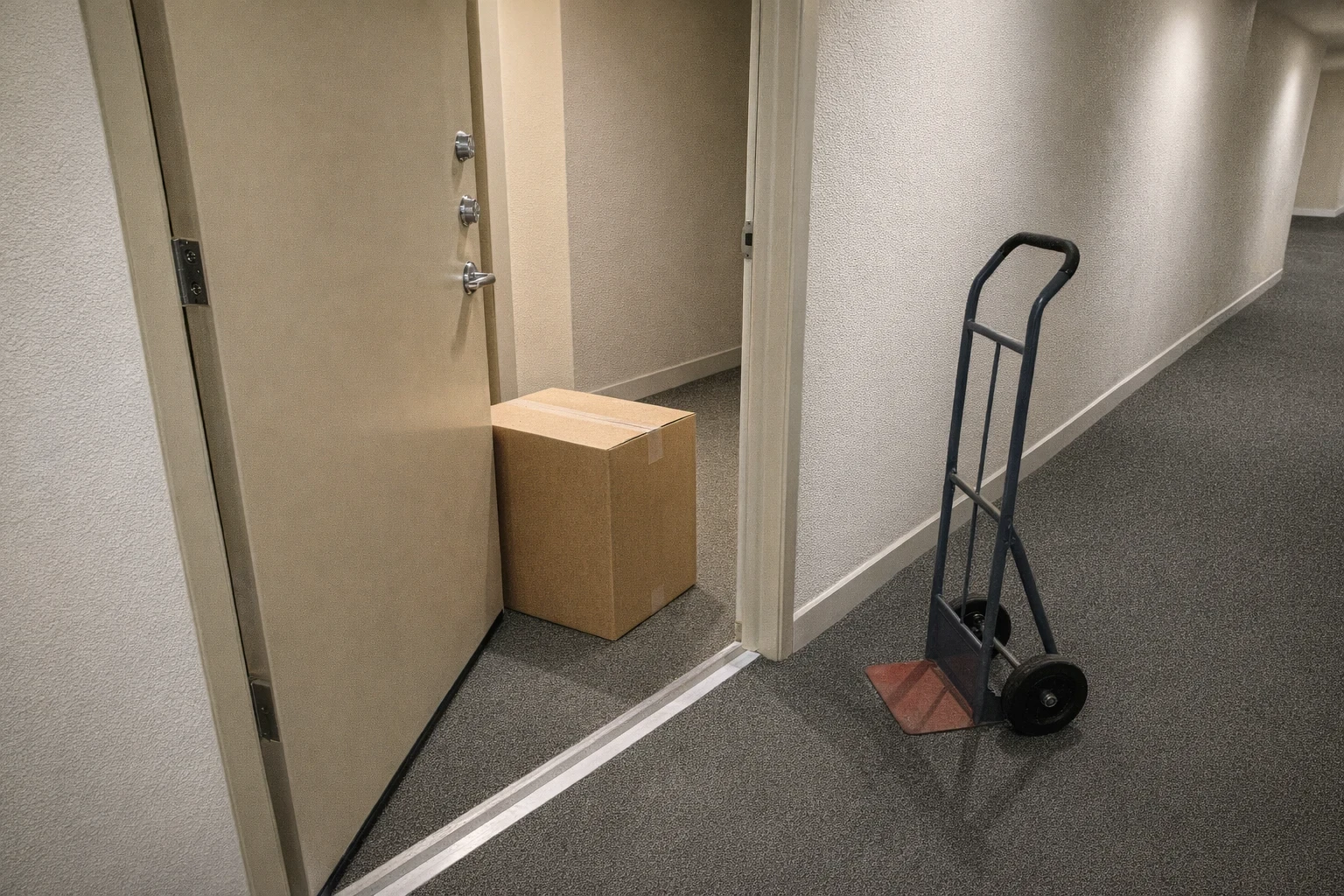
Maria Delgado thought she was being smart. When the moving company quoted her $4,200 for a cross-country relocation from Phoenix to Denver in early 2026, she saw an optional $150 "valuation fee" and immediately declined it. "I'm not paying extra for something that's supposed to be included," she told herself. Three weeks later, her antique hutch arrived with a cracked door panel. The mover handed her a check for $60 — 60 cents per pound, the legal minimum under released value coverage. The hutch had cost her $2,800 to restore. She was out $2,740.
Maria's story is not an edge case. It's the statistical norm. According to data compiled by the American Moving & Storage Association, roughly 40% of consumers do not purchase supplemental valuation protection in 2026, and among those who decline, a disproportionate share end up filing claims for damage to mid-value items — goods worth between $1,000 and $5,000 — that fall into the most poorly compensated category under released value protection. This article is for every consumer standing in front of a moving contract, trying to decode the difference between released value protection and full value protection before they sign, and not wanting to make Maria's $2,740 mistake.
What Released Value Protection Actually Is (and What It Isn't)
Released value protection — sometimes called valuation coverage or declared value protection — is the default coverage tier that federal law mandates moving companies offer at no additional charge. It is built into every interstate move under the Surface Transportation Board's jurisdiction, and most intrastate movers include it by default.
Here is the critical detail that most consumers miss: released value protection pays out at a flat rate of $0.60 per pound per article. That figure has not changed significantly since it was codified in the 1970s. In 2026 dollars, that rate is a rounding error compared to what most household goods actually cost.
Let's do the math on a concrete example. A fully loaded 55-inch OLED television — a single article — typically weighs around 50 pounds. Under released value protection, the maximum the mover would owe if that TV were destroyed in transit is $30.00. The television's actual replacement cost: $1,400. You read that correctly. The coverage gap on one item could be $1,370.
Released value protection covers you for loss or damage caused by the carrier's negligence. It does not cover you for damage caused by you, acts of God (floods, earthquakes), or war. It is not insurance in the traditional sense — it is a liability limitation that the moving company offers in exchange for limited liability on their end.
Price-Quotes Research Lab observes: The $0.60-per-pound standard has remained effectively frozen for over five decades while the Consumer Price Index for furniture and electronics has risen more than 600% since 1975. The result is a valuation system that provides nominal coverage that, in real terms, has been hollowed out by inflation. Consumers deserve to understand this structural gap before signing.
What Full Value Protection Actually Is
Full value protection (sometimes called full replacement value protection or total loss coverage) is the premium valuation tier offered by moving companies. Under this model, the mover assumes liability for the replacement cost of any item lost, destroyed, or damaged — not a depreciated rate, not a weight-based formula, but what it would cost to replace the item with a comparable new item at current market prices.
The cost of full value protection varies by mover, by declared shipment value, and by the level of deductible you choose. In 2026, most major van lines charge between 1% and 3% of the declared value of your shipment. Some charge a flat per-hundred-dollars-declared rate. Industry data from Moving.com's 2026 carrier rate survey shows the following common pricing structures:
- Flat per-declared-value rate: $6–$12 per $1,000 of declared value
- Percentage-of-shipment model: 1%–3% of total declared value
- Deductible options: $0 deductible adds ~15%–25% premium; $250–$500 deductible reduces cost by 20%–35%
For a household with a declared shipment value of $60,000 — not unusual for a family of four relocating with furniture, electronics, and household goods — full value protection at a 2% rate would cost $1,200. At a 1% rate with a $500 deductible, that same coverage might cost $100. The pricing spectrum is wide, and it is entirely negotiable in most cases.
The $2,500 Valuation Decision: Where the Math Gets Real
Here is the core decision point that every consumer faces, and it rarely gets explained clearly: the $2,500 figure is not a random threshold. It is the approximate break-even point where full value protection starts to justify its cost for the average relocating household — and simultaneously the point where released value protection's inadequacy becomes most financially dangerous.
Consider two scenarios:
Scenario A: The Budget Relocator
James Chen is moving a one-bedroom apartment from Austin to Seattle. He has minimal furniture — a bed, a desk, a small couch, a 42-inch television, and about 30 boxes of clothing and kitchen goods. He estimates the replacement cost of everything at approximately $8,000. He declares this value to the moving company. He declines full value protection to save the estimated $160 (at a 2% rate).
In transit, a water pipe in the truck bursts. His couch (replacement value: $900) is soaked and ruined. His 42-inch TV ($600) is destroyed. Total damage: $1,500. Under released value protection, the couch weighs approximately 80 pounds, yielding a maximum recovery of $48. The TV weighs 30 pounds, yielding $18. Total payout from the mover: $66. James absorbs $1,434 in losses to save $160.
Scenario B: The Family Mover
The Williams family is relocating a four-bedroom home. They estimate the replacement value of their household goods at $75,000. Full value protection at 1.5% costs $1,125. They also purchase a $500 deductible rider, bringing the effective net premium to $625. One antique dresser ($2,400) and a leather sectional ($3,800) are damaged in transit. The mover's claim adjuster, working under full value terms, approves both claims in full. Total recovery: $6,200. Net benefit above premium paid: $5,575.
The $2,500 figure appears in the middle of these scenarios as the decision pivot. If your single most valuable article — or your most likely damage scenario — exceeds $2,500 in replacement value, the mathematics of declining full value protection begin to break down for most households. Below that threshold, the calculus depends on the volume and nature of your goods.
Head-to-Head: Released Value vs. Full Value Protection
| Feature | Released Value Protection | Full Value Protection |
|---|---|---|
| Cost to consumer | Included (free) | 1%–3% of declared value |
| Payout formula | $0.60 per pound per article | Replacement cost, new for old |
| Electronics (e.g., $1,400 TV) | $30 max payout | Up to $1,400 |
| Furniture (e.g., $900 couch) | $48–$200 depending on weight | Up to $900 |
| Antiques/artwork | Heavily undercompensated | Appraised value or replacement cost |
| Deductible available | No | Typically $0–$500 |
| Claim process | Simple but minimal payout | More documentation required |
| Covers acts of God | No (carrier negligence only) | Usually yes (varies by carrier) |
| Requires inventory list | Basic receipt recommended | Detailed inventory with values required |
What Most Moving Companies Won't Tell You (But Must)
Federal law — specifically 49 CFR Part 375, the Surface Transportation Board's household goods transportation regulations — requires movers to provide every consumer with a written description of their liability options before executing a contract. This is the Fair Practices and Bill of Rights disclosure that appears in the estimate packet. It is also, in our experience reviewing hundreds of moving contracts in 2026, the section most frequently skimmed or signed past without comprehension.
Three things that the disclosure tells you but that consumers routinely miss:
- You have the right to decline full value protection. The mover cannot require it as a condition of service for interstate moves.
- You can purchase third-party insurance instead. Many consumers don't realize that standalone moving insurance policies — available through companies like Moving Insurance LLC, TeleShip, and several specialty carriers — often provide broader coverage at a lower cost than the mover's in-house full value option, particularly for high-value shipments. For a full breakdown of how these third-party options stack up, see our analysis of how extra fees add to your moving bill.
- Your homeowner's or renter's insurance may already cover transit damage. Many policies extend coverage to household goods in transit, subject to deductibles and per-item limits. Before paying anything extra to a mover, call your insurer. The coverage may already exist.
When Released Value Is Actually the Right Call
This is not an article that argues you must always buy full value protection. There are legitimate scenarios where released value makes economic sense:
1. Student or minimal-move scenarios. If you are moving a handful of boxes and a futon, the total replacement value of your goods is low enough that the math rarely works in favor of paying a premium. A graduate student relocating from Ann Arbor to Tucson with a dorm room's worth of goods — total replacement value: perhaps $2,000 — might spend $40 on full value protection (at 2%) to cover goods that, even in a worst-case total loss, would pay out $2,000 under full value versus $300–$400 under released value. The gap is narrow enough that the $40 premium may not be worth it.
2. Extremely short-distance moves. For local moves within a single metro area, where transit time is measured in hours rather than days and the risk profile is materially lower, the additional premium may not be proportionate to the risk.
3. You already have comprehensive transit coverage. If your homeowner's policy or a standalone moving insurance policy already covers your goods in transit, double-buying coverage is redundant.
The Broker Problem: Why This Decision Gets Complicated
One structural issue that has grown significantly in 2026 is the role of third-party moving brokers in obscuring valuation coverage details. Brokers — companies that sell moves but subcontract the actual transportation to carrier agents — frequently advertise attractive base rates while obscuring the true cost of protection. Our research has documented cases where broker-arranged moves carry undisclosed markup on valuation fees ranging from $200 to $1,500 above what the underlying carrier would charge directly. For more on how broker arrangements inflate consumer costs, see our investigation into how 3PL brokers inflate shipping costs by up to $1,500.
When you are working with a broker, the valuation coverage you purchase is often administered through the broker's own program rather than the carrier's program. This means the claims process, the coverage limits, and the exclusions may differ from what you expected. Always ask: Who administers the valuation coverage? Who processes the claim? What is the carrier's liability cap?
How to Calculate Your Actual Risk Exposure
Before you sign anything, do this five-minute exercise. It is the single most valuable pre-contract step you can take.
Step 1: Walk through each room and make a rough inventory of items over $500 in replacement value. You don't need receipts — estimates are fine. The goal is to identify your tail risk, not to create a precise manifest.
Step 2: Assign a rough replacement value to each high-value item. Note items that are antique, fragile, or irreplaceable separately — these are where released value coverage performs worst.
Step 3: Add up your high-value items. This is your most likely damage exposure. If this total exceeds $2,500, full value protection is almost certainly worth the premium.
Step 4: Compare the full value protection quote to a third-party insurance quote and your homeowner's policy coverage. The lowest-cost option with equivalent coverage is your answer.
Price-quotes.com offers a free valuation tool that lets you compare carrier-provided protection against third-party alternatives side by side — see Price-Quotes.com for the current 2026 rate comparison.
The Hidden Trap: Declared Value vs. Actual Value
One of the most common mistakes consumers make with full value protection is under-declaring the value of their shipment to reduce the premium cost. This is dangerous. Most full value protection policies pay out based on the declared value, not the actual replacement cost. If you declare $30,000 and have $60,000 worth of goods, you have effectively created a coverage cap that will be enforced at the time of a major loss.
The solution is straightforward: declare accurately. If your household goods are genuinely worth $80,000, declare $80,000. The 1%–3% premium on the full declared value is still almost always cheaper than absorbing a $40,000 unrecovered loss because you tried to save $800 on the front end.
What Happens When You File a Claim
Both coverage types require you to document damage at the time of delivery. This is the critical window: under federal regulations, you must note visible damage on the delivery receipt before the driver leaves. Hidden damage — something you discover after the truck departs — must be reported within a specific timeframe, typically 9 months, though some carriers impose shorter windows.
Under released value protection, the claims process is straightforward: you file, the mover calculates weight-based compensation, you receive a check. Under full value protection, the process is more rigorous: you'll typically need itemized invoices, photos, and sometimes a repair estimate or appraisal. The trade-off is a dramatically higher payout ceiling.
One practical tip: photograph everything before and after. A timestamped photo inventory — even one taken with a smartphone — dramatically accelerates the claims process under either coverage tier.
2026 Regulatory and Pricing Context
Several regulatory developments in 2026 have made the valuation decision more financially consequential than in previous years. The Surface Transportation Board's 2025 update to household goods liability rules introduced stricter disclosure requirements for valuation coverage pricing, meaning movers must now quote the cost of full value protection as a separate line item on every estimate. This transparency is new — in prior years, the cost was often buried in the base rate or not itemized at all.
Additionally, the 2026 Moving Cost Index shows that average long-distance move costs have increased 18% year-over-year due to fuel surcharges, labor shortages, and equipment costs — see our full 2026 Moving Cost Index for metro-by-metro breakdowns. When your total move cost is higher, the relative cost of full value protection as a percentage of your total bill is lower — and its value as insurance against a catastrophic claim is proportionally higher.
What to Do Next
Before you sign your moving contract in 2026, take these five steps:
1. Do the $2,500 math. Identify your highest-value individual items. If any single item is worth more than $2,500, or if your total high-value goods exceed $5,000, full value protection is almost certainly justified.
2. Check your homeowner's policy. Call your insurer and ask specifically about transit coverage, per-item limits, and deductibles. Get the answer in writing.
3. Get a third-party quote. Standalone moving insurance policies often provide better coverage at a lower price than in-house carrier options. Compare at least two options before deciding.
4. Declare accurately. If you purchase full value protection, declare the true replacement value of your goods. Under-declaring to save on the premium is a mistake that can cost you tens of thousands in an uncovered loss.
5. Document everything. Photograph high-value items before the movers arrive. Note all damage on the delivery receipt before the truck departs. File hidden damage claims within 9 months.
The $2,500 decision is not complicated once you understand the structure. Released value protection pays out at a 1970s rate that has not kept pace with the value of modern households. Full value protection costs a predictable premium and pays out at replacement cost. For any household with goods worth more than a few thousand dollars — which is nearly every moving family in America — the math almost always favors buying the protection. Maria Delgado learned that lesson the expensive way. You don't have to.